
Last updated November 25, 2026
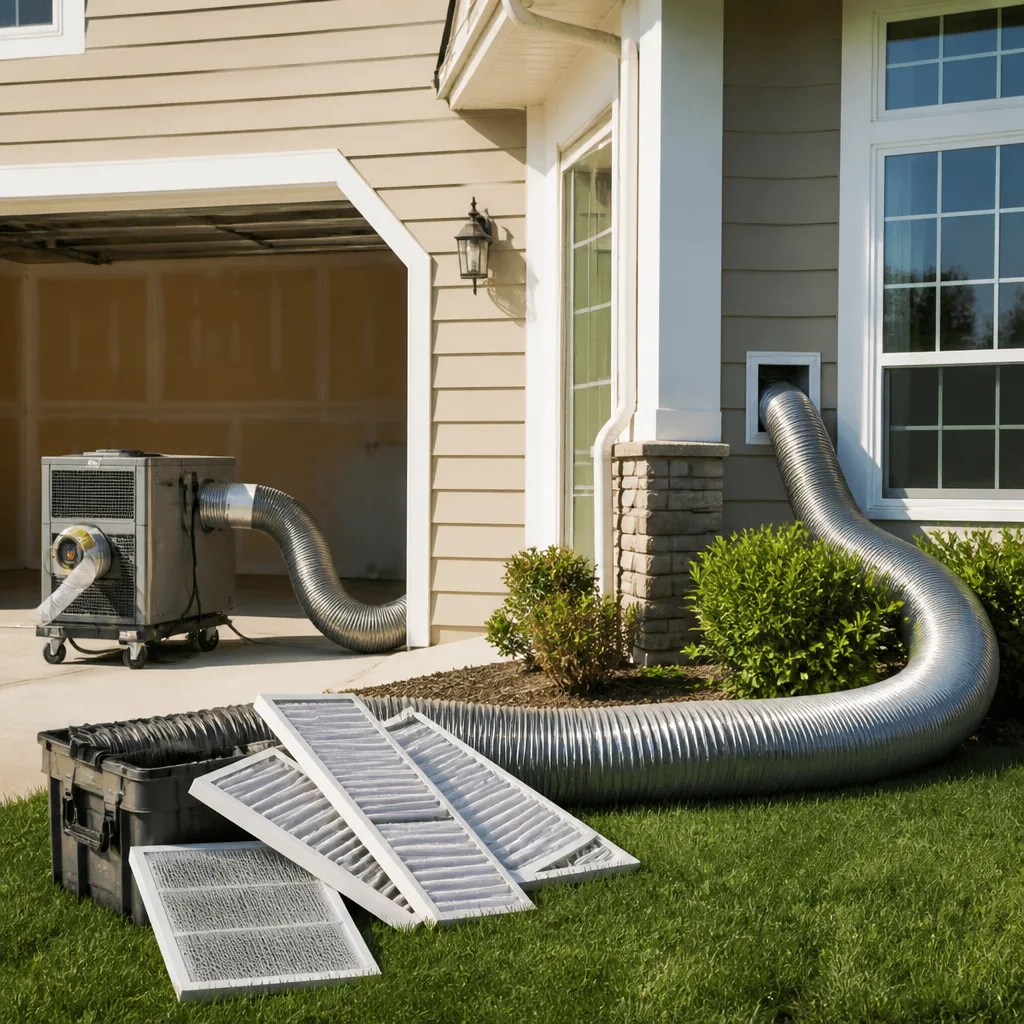 Whole-home duct cleaning
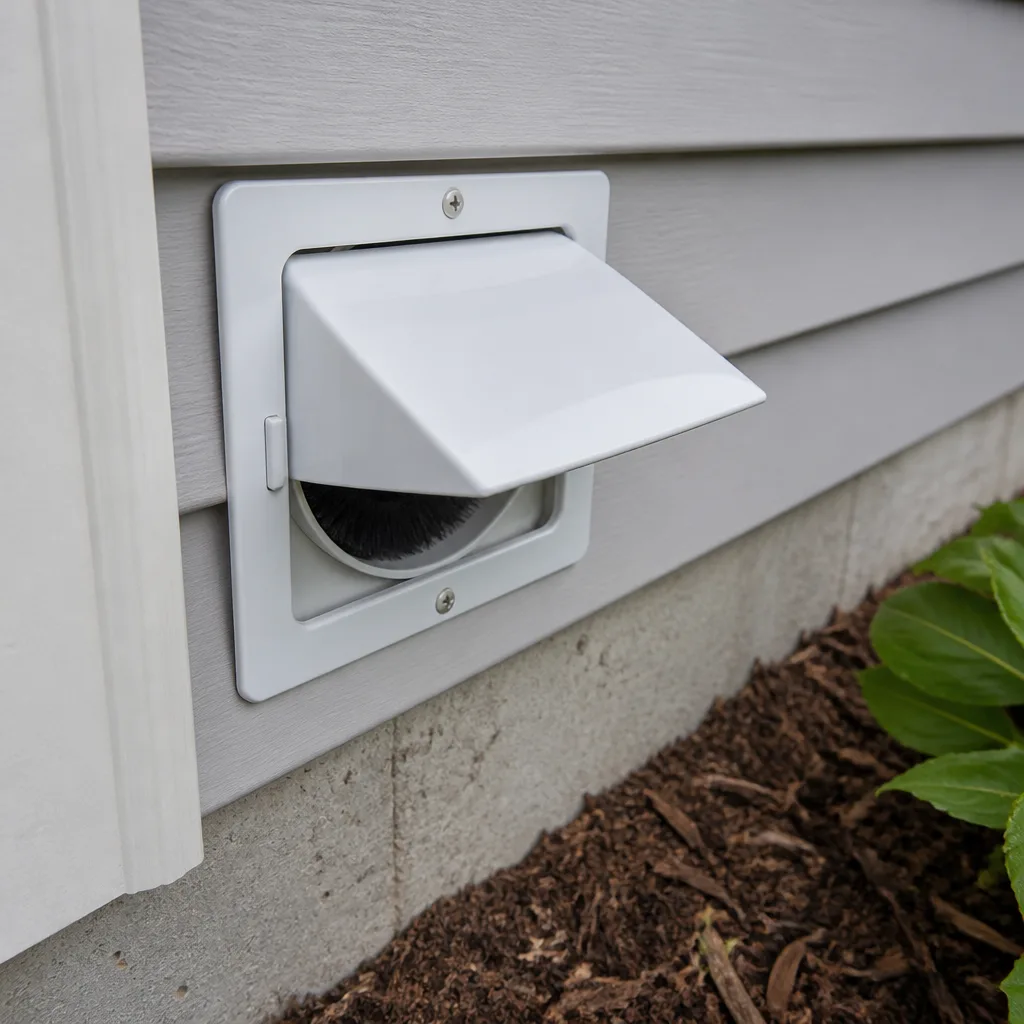 Dryer vent cleaning
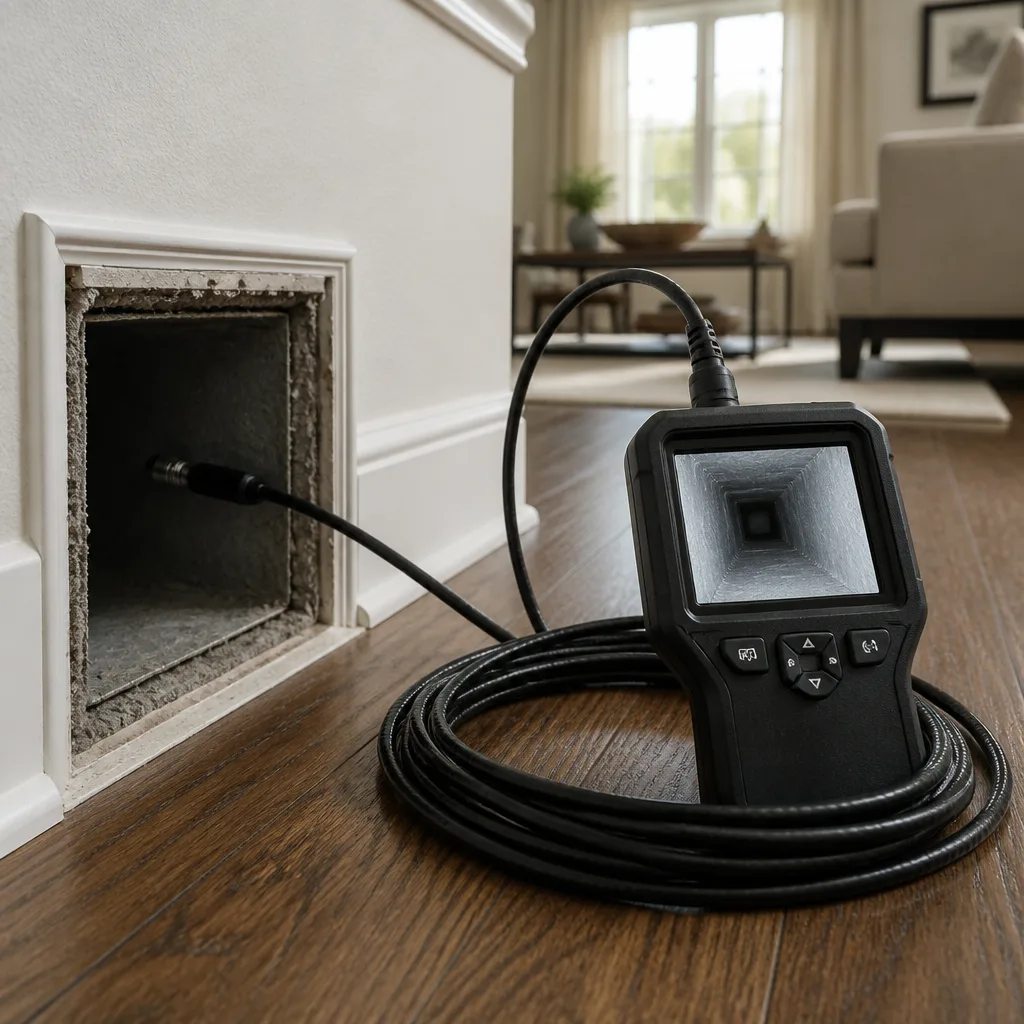 Camera inspection
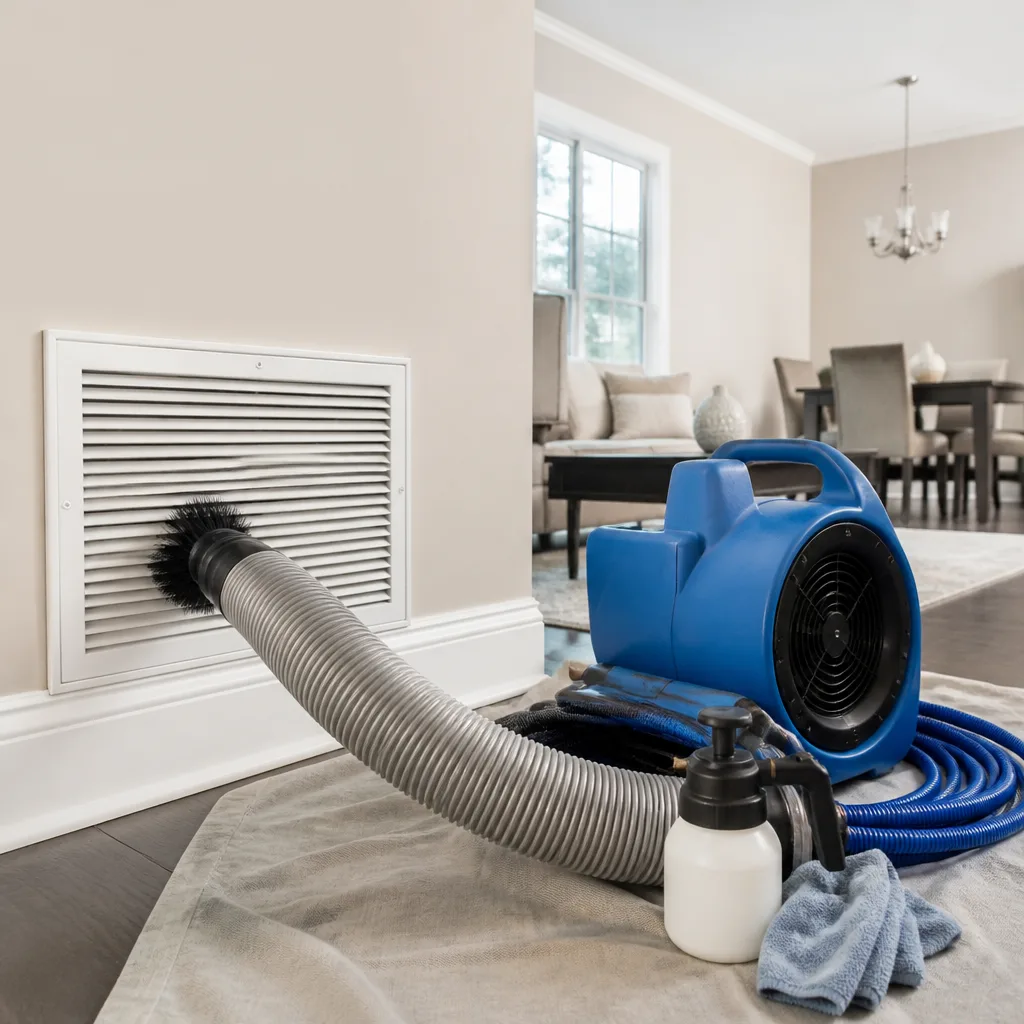 Sanitizing & deodorizing
Whole-system duct and dryer vent check with before-and-after photos - you see exactly what came out of your vents
That "$99 whole-house special" is a bait ad - the real number appears once they are in your hallway, or the "clean" is a shop-vac at the register. We photograph the inside of your ducts before and after instead.
Air Duct Cleaning Emergency Preparedness Guide for Meadow Hills Homes
During a wildfire smoke event, the worst thing a Meadow Hills homeowner can do is leave the thermostat on “auto” and let the system run as usual. Most people don’t know that. The instinct is to keep the house comfortable and trust the filter to handle it. But every time that blower kicks on with smoke sitting in the outdoor air, the return side pulls it through the filter housing, past the gaps around the filter slot, and into the ducts where it settles on surfaces you’ll never see from the register. This guide walks through how the three events Meadow Hills sees most often – wildfire smoke, sudden HVAC failure in a hard freeze, and water intrusion from snowmelt or a burst line – each interact with the duct system specifically. You’ll learn what to shut down, what to leave running, what to document, and when waiting for a convenient appointment turns a cleanup into a repair.
Quick Answer
During an air-contamination event in Meadow Hills, shut the HVAC system off rather than letting it circulate, seal the return intakes, and keep windows and doors closed until the outdoor air clears. After a water intrusion event, get the duct system assessed within 48 to 72 hours – mold can establish on damp duct liner in that window, and a cleaning that would have handled the problem can become a duct replacement if you wait. After any contaminating event, document dates, photographs, and any air quality readings before calling for air duct cleaning.
Styles & brands we work with
- Whole-home duct cleaning
- Dryer vent cleaning
- Camera inspection
- Sanitizing & deodorizing
Table of Contents
- Why Meadow Hills Ducts Take the Brunt of an Emergency
- Wildfire Smoke Protocol for Meadow Hills Homes
- Post-Flood and Moisture Intrusion: The 48-72 Hour Window
- When the HVAC System Fails Mid-Winter in Meadow Hills
- Maintaining Safe Air Circulation When Service Isn’t Available
- Emergency Documentation for Insurance Claims
- What a Full-System Response Actually Involves
- How to Know When the Duct System Is Truly Recovered
Why Meadow Hills Ducts Take the Brunt of an Emergency
A duct system is a long, dark, mostly horizontal set of surfaces. That’s the whole problem. Every emergency that pushes particles or moisture into a Meadow Hills home moves through the same space: the return grilles, the filter housing, the trunk line, and the branch runs to every room. When the air outside turns bad, the system becomes a delivery mechanism. When water gets in, the system becomes a cool, dark place for it to sit.
Meadow Hills homes deal with a specific set of pressures. Cold winters mean the furnace runs hard for months, so whatever deposits in the ducts in the fall gets baked onto the heat exchanger and blown through the house all season. The region’s wildfire season adds a second layer – smoke events that can last days and push fine particulate deep into a system that had no defense in place. And the freeze-thaw cycle that comes with a Colorado winter means water intrusion events are often sudden, from a thawed line or a wind-driven snow drift through a vent, not a slow leak you’d notice over weeks.
What most homeowners miss is that the duct system isn’t a passive envelope. It’s a pressure system. A return that pulls negative pressure on a basement or crawl space will draw in whatever air is there, including damp air off a wet foundation. Supply ducts that leak at the joints will push conditioned air into a wall cavity, and that wall cavity will pull in outside air somewhere else. Sealing those joints matters as much as cleaning the ducts themselves, which is why we treat duct repair and sealing as part of the same job rather than a separate upsell. Air Duct Cleaning Meadow Hills covers the full range of what a system can need, and emergency recovery sits at the messy end of that range.
Our technicians have up to 11 years of experience working in systems like the ones in Meadow Hills, and the pattern is consistent: homes that had a recent cleaning and sealed joints come through a smoke event far better than homes that had never been touched. That’s the case for preparedness, and it’s the reason this guide exists.
Wildfire Smoke Protocol for Meadow Hills Homes
The counterintuitive rule: when wildfire smoke settles over Meadow Hills, turn the HVAC system off. Not down. Off. The reason is simple – a running system pulls air through the return and into the ducts at a high rate, and a standard 1-inch filter doesn’t stop fine smoke particles at the speed the blower moves them. Running the system on “auto” during a smoke event is how the inside of your ducts picks up a fresh film of ash and combustion residue that will keep circulating every time the heat comes on for months afterward.
Here’s the sequence we recommend for a smoke event, in order:
- Shut the system down at the thermostat. Set it to “off,” not “fan.” A fan-only setting keeps circulating air with no filtration benefit beyond the filter itself and no heating or cooling load to justify it.
- Seal the return intakes. A clean, dry towel or a piece of plastic sheeting taped over the return grille cuts the path between the outdoor air (via the return) and the ducts. Don’t seal supply registers – you want the system able to breathe once it comes back on, and sealing supply vents won’t stop infiltration.
- Upgrade the filter before the event, not during it. A pleated filter with a higher MERV rating helps, but check the furnace’s rated maximum before you buy one. A filter that’s too restrictive for the blower can strain the motor and cut airflow enough to cause problems elsewhere. If you’re not sure of the rating, a standard pleated filter sealed tightly at the frame does more than a high-MERV filter that sits loose in the slot.
- Close windows and doors, and keep them closed. Obvious, but people break it – a quick trip out to the car or a dog that needs letting out opens the house to smoke concentration in seconds.
- Delay the cleaning until the air clears. Cleaning ducts while the outdoors is still smoky is wasted work. Wait until air quality is back to normal for a few days, then have the system assessed. Fine particulate that settled in the ducts can be pulled back into the living space the first time the blower runs at full speed after the event.
When the event is over, run the system on fan only for a short period to move settled air out of the ductwork into the living space where a room air cleaner or an open window during a clean day can exchange it. Then schedule an inspection. If the ducts had visible deposits before the smoke event, the smoke layer on top of that is the point at which a full cleaning is the only honest answer. A professional system using a Rotobrush or Nikro setup can agitate and extract that film; a shop vacuum or a consumer-grade machine cannot.
Post-Flood and Moisture Intrusion: The 48-72 Hour Window
Mold can begin establishing on damp duct surfaces within 48 to 72 hours of a water intrusion event. The clock starts when the moisture reaches the duct liner, not when you notice the smell. This is where the “I’ll schedule it when things settle down” instinct does real damage. A duct cleaning that costs a few hundred dollars can become a duct repair or replacement job costing several times more if damp surfaces are left alone long enough for growth to take hold.
Where does water get into ducts in Meadow Hills? A few common routes:
- Wind-driven snow or rain through a roof vent or a poorly flashed penetration, running down into a duct chase
- A frozen and split pipe above a finished ceiling, dripping through the ceiling plane and into a return box
- Sump failure or a backed-up floor drain in a basement that floods a low return
- Ice damming at the roof edge that forces water into the attic and onto a duct run
- An AC condensate line that clogs or freezes and overflows into the air handler cabinet and the supply plenum
The assessment window matters more than any single step. Here’s the order we recommend:
- Stop the water first. Nothing else matters until the source is shut off, repaired, or drained. Water in a duct is a symptom; the source is the problem.
- Shut the system off. Running a blower through a wet duct spreads moisture and any biological growth into every branch and every room. Don’t test it “just to see if it works.”
- Document within hours, not days. Photograph every wet surface, take a moisture reading with a meter if you own one, and note the date and time the intrusion started. This becomes your insurance file.
- Get the system assessed within 48 to 72 hours. An assessment tells you whether the duct liner is saturated, whether the air handler cabinet took on water, and whether any of the material has to be removed. This is the step people skip, and it’s the one that decides whether you need a cleaning or a repair.
- Dry before you clean. A professional crew won’t clean a wet duct system – cleaning a wet surface and then leaving it wet accomplishes nothing. Mechanical drying comes first. Only then does cleaning, and only after that would sanitizing make sense.
If the duct has flexible liner, fiberglass board, or any acoustical material exposed to the water, expect a section of replacement. That’s not a sales pitch. It’s the difference between a system that dries and one that stays a mold reservoir for years. Ask any contractor you call to explain how they’ll verify the system is dry before cleaning begins. If they can’t answer that clearly, keep looking.
When the HVAC System Fails Mid-Winter in Meadow Hills
When a furnace dies in a Meadow Hills cold snap and the ducts are open to the outdoor air through an unfiltered return or a failed heat exchanger cabinet, the ducts become a channel for cold. Sealing the system off to protect the house is a temporary measure, and it needs to be done with materials that come out cleanly – not spray foam or construction adhesive.
What to do when the furnace fails and the ducts are exposed:
- Shut the thermostat to off. Don’t cycle it in hopes the burner will catch. Repeated ignition attempts can damage components further, and a system with a cracked heat exchanger is a carbon monoxide concern that goes beyond cold.
- Seal the return intake with removable material. Plastic sheeting or a heavy towel taped over the return grille is enough. Skip the supply registers – sealing every register in a cold house is a lot of work for a small gain, and the return is where the cold and any outdoor air enters.
- Close off rooms you don’t need to heat. Concentrate the house. A cold bedroom with the register closed and the door shut holds heat better than one trying to warm a space nobody’s in.
- Do not run an unvented combustion heater to compensate. No propane heaters indoors, no gas range for heat. This is the rule that saves lives in a Colorado cold snap. If you need heat, use a vented source or go to a neighbor’s.
- Call for repair, then plan the duct check separately. Once the furnace is restored, the ducts should be inspected. A cold event that exposed the interior of a duct system to outdoor air also exposed it to whatever the cold snap dragged in, and a winter’s worth of combustion byproducts that baked onto a heat exchanger during a struggling run need to be evaluated as part of the repair.
If you need heating back on quickly, HVAC cleaning after the repair restores airflow and clears the deposits that built up while the system was cycling on a failing component. If the ducts themselves sustained damage – a section crushed, a joint that separated in the cold, a return line that pulled loose – Air Duct Cleaning Meadow Hills can seal what we find rather than clean around it. That separation is the difference between a cosmetic visit and an actual repair.
Maintaining Safe Air Circulation When Service Isn’t Available
After a contaminating event, you want air moving – just not through a system that’s holding contaminants. That’s the tightrope. The goal is to keep the house from becoming stale while keeping the ducts out of the loop, and there are a few practical ways to do it.
Run the system on fan only in short bursts, not continuously. A 15-minute fan cycle moves the air in the living space enough to break up pockets of humidity and smells, and it won’t keep pulling settled material off the duct walls the way a full heating or cooling cycle will. If you have a system with a fresh air intake, cap it or close the damper during a contamination event, because that intake is doing exactly the opposite of what you want.
Use a standalone room air cleaner. A HEPA unit in the room where people spend the most time – a bedroom or a main living area – handles particulate that a room’s circulation can deliver to the intake. It doesn’t replace the whole-house system, but it’s honest help during a gap between the event and the service appointment. Rotate it between rooms every few hours if you only have one unit.
Ventilation has to be balanced. A house held too tight after a smoke or moisture event will accumulate humidity and VOCs. Open a window on a clean day for ten minutes and let a cross-breeze exchange the air, then close up. Don’t leave windows cracked continuously – that pulls outdoor air in through the whole house, return system and all. If your home has a Honeywell or Aprilaire ventilation control, this is the moment to understand what it’s doing; a system that’s actively drawing outdoor air in is the wrong setting during a smoke event and the right one during a normal day.
Watch the humidity. A cheap hygrometer from a hardware store will tell you more than any sales pitch. Aim to stay in the 30-50% relative humidity range indoors after a moisture event. Above 60% and you’re feeding mold. Below 30% and you’re setting up the conditions for static, cracking woodwork, and comfort problems in a Meadow Hills winter.
Don’t run the dryer. If you’re waiting on dryer vent cleaning because the vent has been compromised by a moisture event or a fire risk, a running dryer pushes hot, damp air into the same house that’s already dealing with humidity. Wait for the vent, or dry clothes on a rack in a room with a window.
Emergency Documentation for Insurance Claims
Insurance claims for duct damage from weather events get denied more often for lack of documentation than for lack of coverage. The adjuster needs a paper trail that ties the damage to a specific event, and the homeowner who has that file in hand at the first call is in a different position entirely from the one who tries to reconstruct it a month later.
What to collect, in order, from the moment of the event:
- Date and time stamps. When the event started, when you noticed the first sign of damage, when you shut the system off. These anchor everything else.
- Photographs of the event itself, not just the aftermath. The water line on the wall, the smoke layer outside, the ice on the roof edge, the failed pipe. Wide shots and close-ups. Fifteen photos in the first hour is not too many.
- Moisture readings from a meter, with photographs of the meter display. Print or write the reading next to the date and the location in the house. A $30 moisture meter pays for itself in one claim.
- The model and serial number of your HVAC equipment and the make and model of the air handler. This is on the data plate inside the cabinet. Photograph it before anything gets repaired or removed.
- Any air quality readings you took during the event, with the device that produced them. A consumer-grade air quality monitor is fine as supporting evidence, and note what device it was.
- A written log of every phone call. Date, time, who you spoke to, what was agreed. This protects you if a repair you authorise turns out to be larger than intended.
- A pre-loss condition record if you have one. A maintenance log, an invoice from a previous cleaning, or even a phone photo of the open duct during a prior service. Adjusters weigh pre-loss evidence heavily when deciding whether a duct system was damaged or simply old.
Keep this file separate from your insurance paperwork until the claim is open, then submit it as one package with a cover sheet that walks the adjuster through the timeline. If the claim involves a fire or smoke event, ask whether your policy covers duct cleaning as mitigation, not just repair. Coverage varies widely and it’s worth a direct question before you schedule anything.
What a Full-System Response Actually Involves
Cleaning ducts after an emergency is the beginning of the answer, not the whole answer. A system that survived a smoke event or a moisture exposure typically needs three things: the ducts cleaned, the joints sealed, and the air treatment brought up to current standards. A company that only does one of the three leaves you with an incomplete job and a reason to call someone else.
Here’s what a complete response looks like, and what equipment it takes:
- Mechanical cleaning with professional extraction. The Rotobrush and Nikro systems are the industry standard for residential duct cleaning – they agitate the deposits off the duct wall and extract them at high vacuum, rather than blowing them into the living space. Consumer-grade vacuums and shop vacs don’t move enough air or generate enough agitation to do this. Abatement Technologies equipment adds the contaminant-control capability that matters when the event involved mold, smoke residue, or biological material.
- Sealing the joints and the gaps. Every cleaning opens the door to the next question: where did the deposits get in? Loose joints, disconnected sections, and gaps at the plenum are the usual answer. If the system isn’t sealed after cleaning, it re-contaminates through the same gaps. Guardsman sealants are the product we bring to that step.
- Drying and contamination verification. For any moisture-involved event, drying comes before cleaning and verification comes after. A moisture meter and a visual inspection of the duct interior – not just the grille – tells you whether the job is done.
- Air treatment and filtration. A Honeywell or Aprilaire filter system at the air handler gives the system a real defense for the next event, not just a filter in a loose slot. This is the difference between recovered and prepared.
- Dryer vent service. A full-system event often reveals a dryer vent that hasn’t been cleaned and is now a fire risk. This is a discreet step most duct cleaners skip entirely, and it’s one of the five services Air Duct Cleaning Meadow Hills offers for exactly that reason.
- Sanitizing where warranted. After a moisture or contaminant event, a sanitizing step with a product-backed system makes sense once the ducts are dry and clean. It’s not a substitute for cleaning, and it’s not a fogger thrown in to sell a service. It’s a verification-backed step layered on top of the work that came before.
If you want to think of it plainly: clean ducts are the beginning, not the end. The full-system answer is what restores the home to normal and preps it for the next event.
How to Know When the Duct System Is Truly Recovered
Recovery isn’t a feeling. It’s a set of observable facts. After a cleaning and any repair work, you should be able to walk through the house and see the following within a few days:
- No musty or smoky odor coming out of any register when the system first starts up for the day
- Even airflow at every register – if one is weak and the others are strong, a joint may still be leaking or a section may still be blocked
- Reduced dust settling on surfaces in the first week after cleaning, then a return to a normal baseline, not back to the pre-cleaning level
- A filter that stays visibly clean longer than it did before the cleaning – a clear sign the ducts aren’t shedding into the airstream
- No visible moisture or staining at the air handler cabinet, the plenum, or any duct section after the first week
- Comfort that holds through a temperature swing, not just at the thermostat
If any of these don’t hold after a week, that’s the signal to call for a follow-up inspection. Sometimes it means a joint was missed. Sometimes it means a section of liner has to be replaced. Occasionally it means the system was never fully dry before the cleaning. Either way, the follow-up tells you which. A professional crew with professional equipment can verify what’s happening inside the system; the homeowner can only observe what comes out at the register.
One more thing to know about recovery: the first heating season after a smoke or moisture event is the real test. Combustion residue that’s still on the heat exchanger or in the supply plenum bakes into a smell you can’t un-smell once the system has been running for a week. If that happens, don’t wait until spring. Call and have the system re-inspected.
Common Mistakes to Avoid
- Running the system on “auto” during a smoke event. This is the single most common mistake we see. The system pulls smoke through the return and into the ducts, and the deposit settles everywhere the blower can reach.
- Cleaning a wet duct system before it dries. Cleaning a wet duct and leaving it wet accomplishes nothing and can spread growth into every branch. Dry first, clean second.
- Treating a moisture event as cosmetic. A water stain on the ceiling is a symptom. The duct runs above it may be saturated and need removal, not just cleaning. If you skip the 48-72 hour assessment, you’re betting the system didn’t absorb water. It usually did.
- Sealing the supply registers while leaving the return open. The return is where the outdoor air enters during an event. Sealing the supply does nothing for containment and can create pressure problems in the house.
- Buying a higher-MERV filter without checking the furnace’s rated maximum. A filter that’s too restrictive cuts airflow, strains the blower, and can damage the heat exchanger. The furnace’s data plate tells you what it can handle. Buy to that spec, not above it.
- Skipping the pre-loss file. If you don’t have photographs and model numbers before a repair or insurance claim, you’re reconstructing a record under pressure. Take the file in the calm moments, not the crisis.
- Relying on a shop vac for a post-event cleanup. A consumer vacuum can’t move enough air or generate the agitation required to lift settled deposits off a duct wall. It can make the problem worse by redistributing fine material into the living space.
See the difference
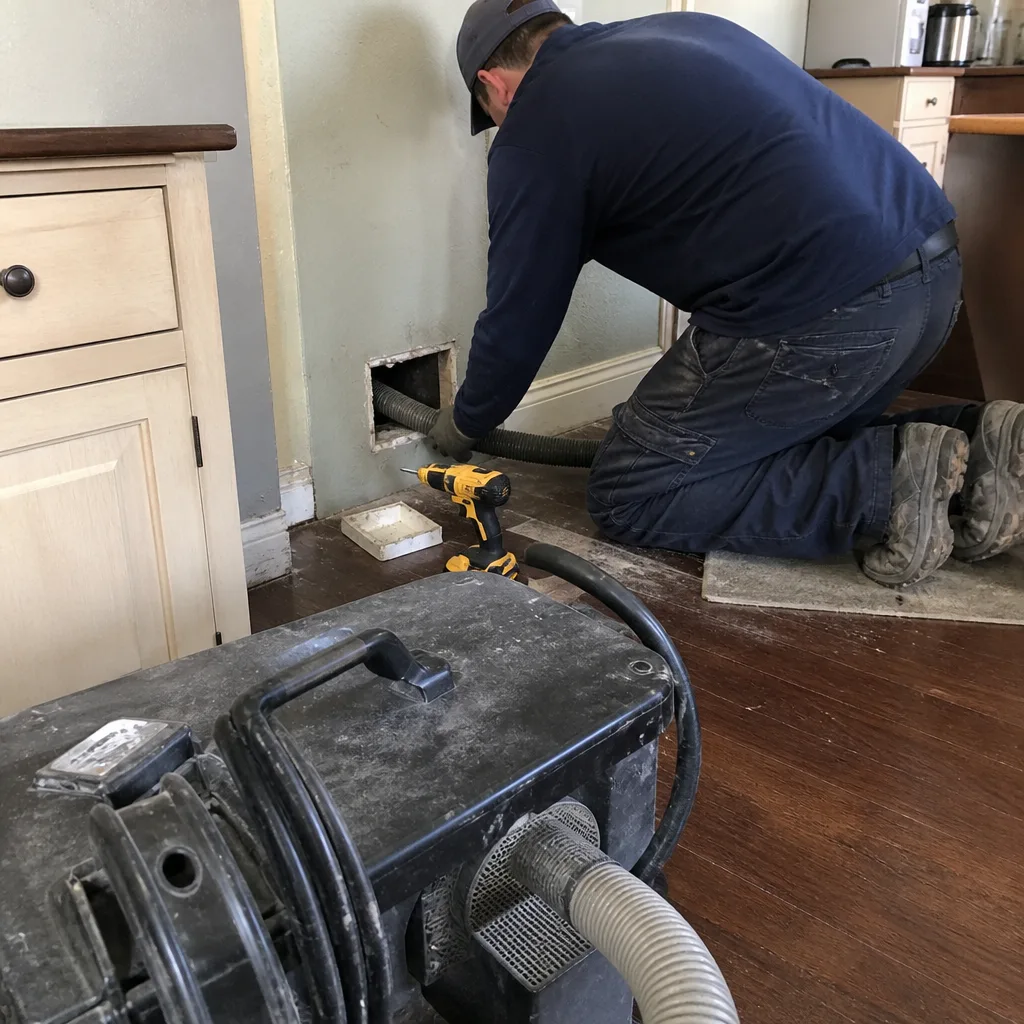 Before
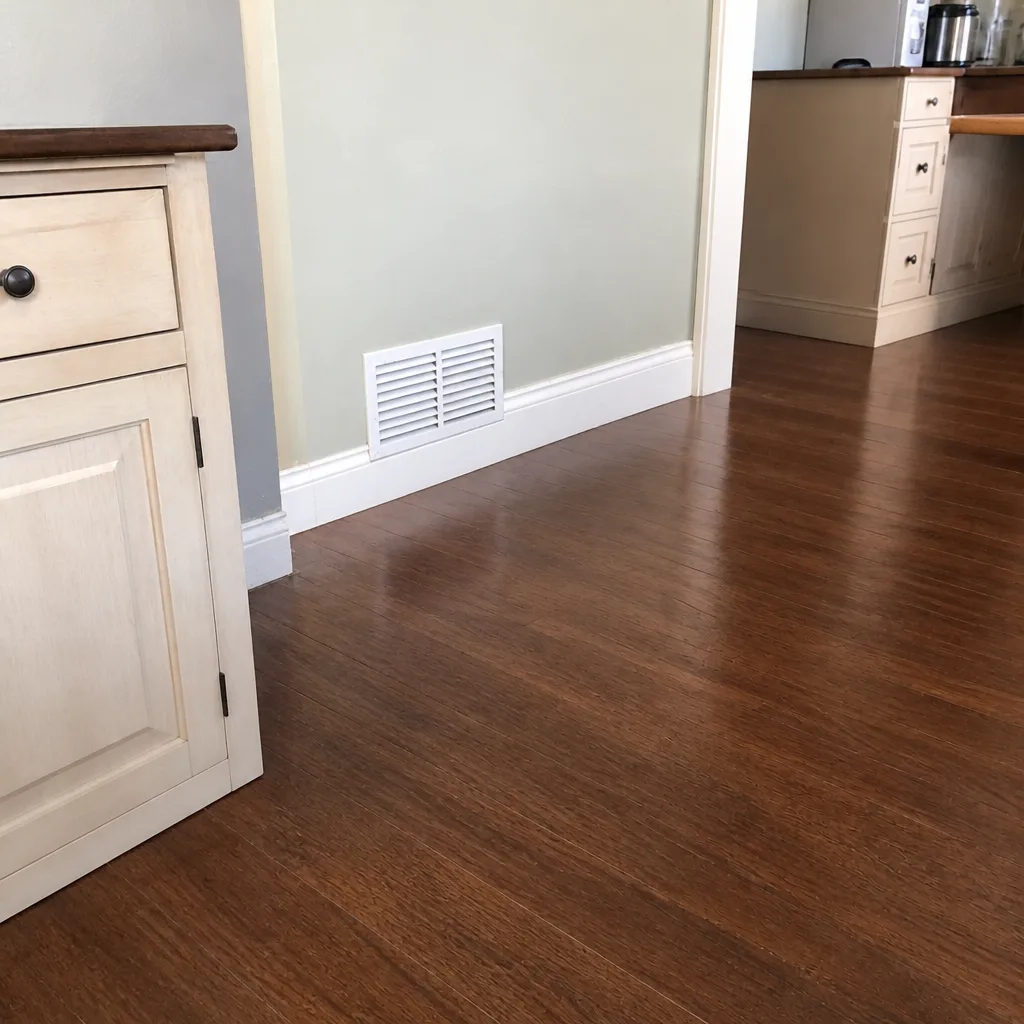 After
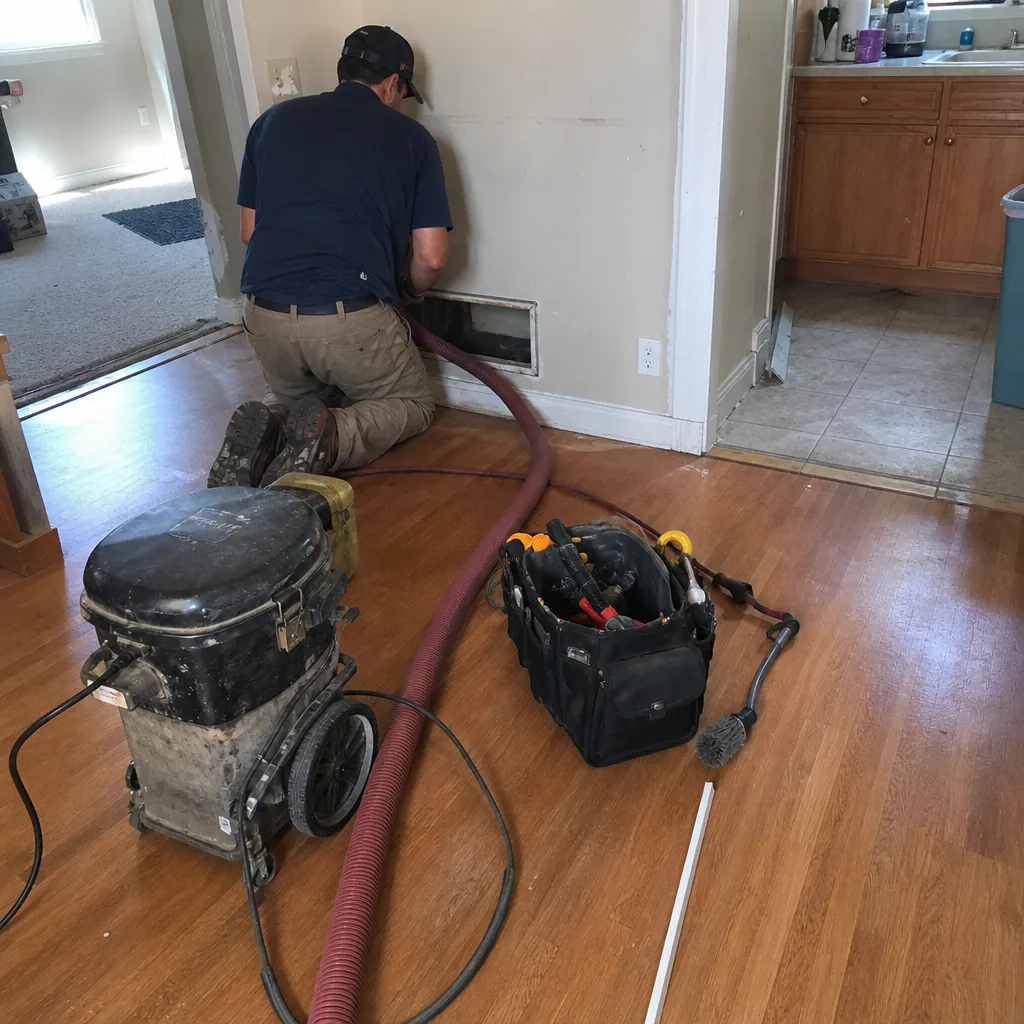 Before
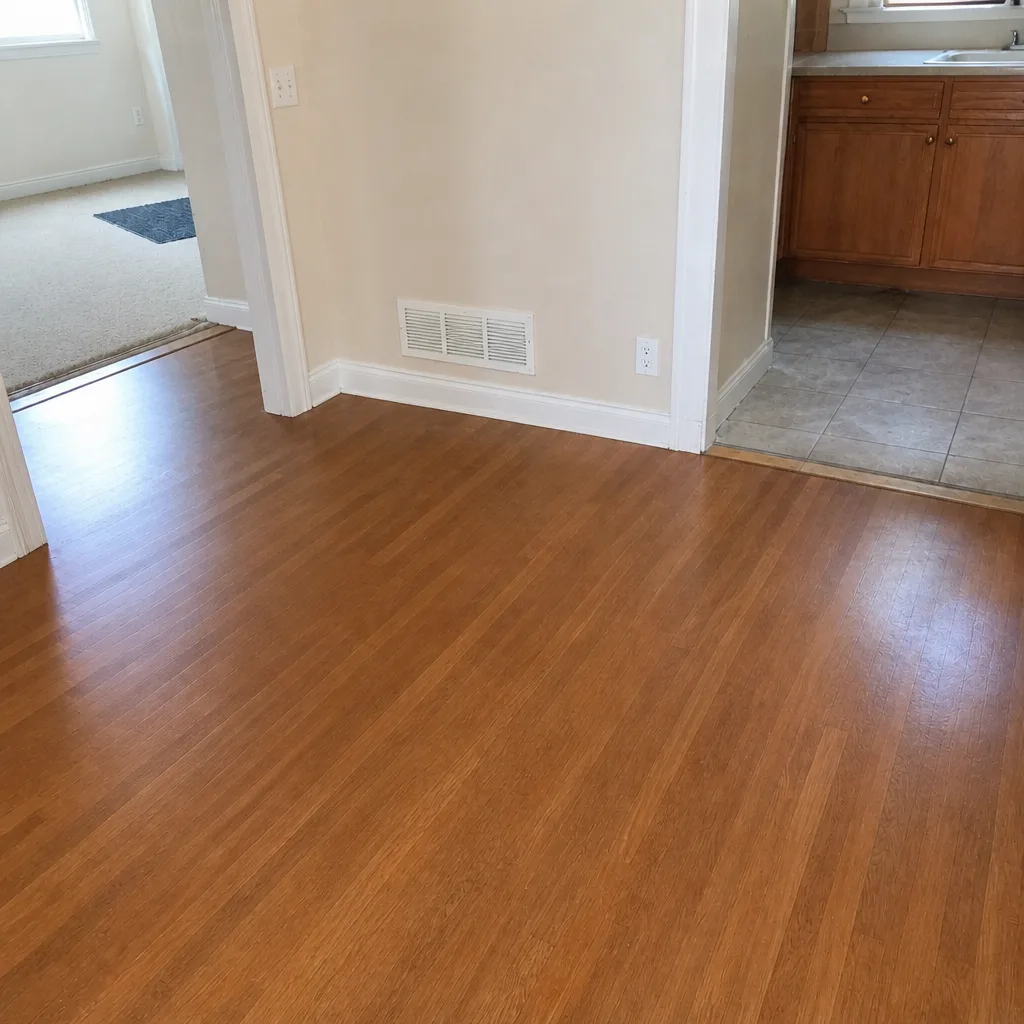 After
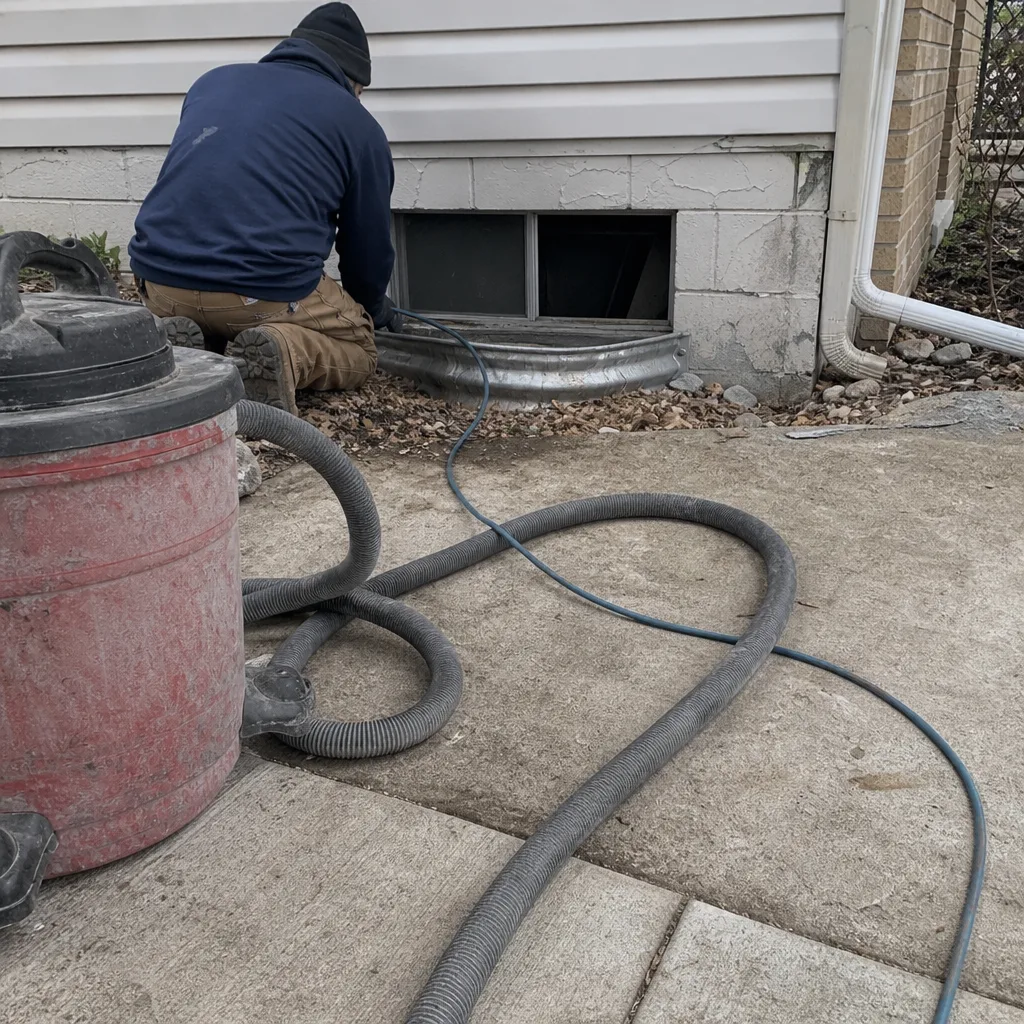 Before
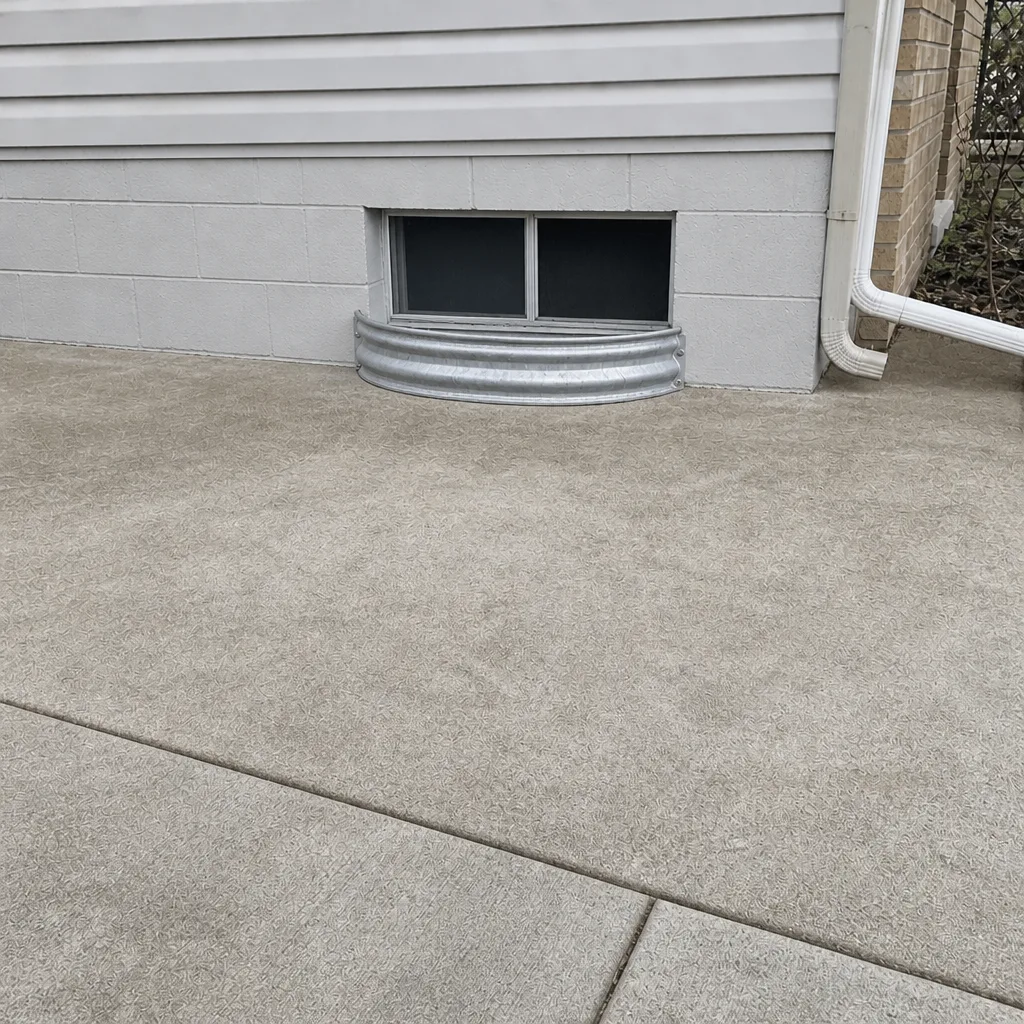 After
When to Call a Professional
Some of this guide is about what you can do in the first hours of an emergency. Some of it is about knowing when the situation has moved past what a homeowner should handle. The line is usually clear: if the ducts have been exposed to smoke for more than a day, if water has touched any duct surface, if a furnace has failed and the ducts were open to outdoor air, or if a filter isn’t staying clean after a cleaning, that’s a professional assessment, not a wait-and-see. Our technicians have up to 11 years of experience and work with the professional equipment the job requires. Air Duct Cleaning Meadow Hills offers free estimates in Meadow Hills – call (855) 419-1723. We answer 24/7. Fast dispatch from 7am to 7pm, Sunday through Friday. The estimate is free, and the price is set per job by the written estimate before any work begins.
Frequently Asked Questions
Air duct cleaning in Meadow Hills is priced per system, not per vent, and the price varies with the size of the home, the number of branch runs, and whether repair or sealing is included. Post-event jobs on a system that needs sealing or a section of liner replacement will run higher than a routine cleaning because the scope is larger. The written estimate sets the final price, and it’s provided before any work begins. Call (855) 419-1723 for an exact quote – estimates are free.
Shut the HVAC system off at the thermostat, not just down. Then seal the return intakes with plastic sheeting or a towel, close all windows and doors, and wait for the outdoor air to clear for a few days before scheduling an inspection. Running the system during the event pulls smoke into the ducts and deposits it on surfaces that will re-release it every time the blower runs.
Within 48 to 72 hours. That’s the window in which mold can start establishing on damp duct surfaces. Waiting for a convenient appointment turns a cleaning into a repair or a section replacement. If water touched the ducts, shut the system off, dry the source, and get an assessment on the books that day. Call (855) 419-1723 to schedule the inspection – estimates are free.
No – not effectively, and not safely for a moisture event. Consumer vacuums and shop vacs don’t move enough air to lift settled deposits from a duct wall, and a wet duct requires drying and verification before cleaning, not just agitation. The professional equipment matters here, and so does the assessment that tells you whether the duct needs cleaning or replacement. Call (855) 419-1723 for a free estimate.
Coverage varies by policy and by the type of event. Some policies cover duct cleaning as mitigation after a fire or smoke event; others cover only the repair of the damage itself. The strongest thing you can do is keep the documentation file – dates, photos, moisture readings, equipment model numbers – and ask the adjuster directly whether duct cleaning is covered as mitigation. Call (855) 419-1723 if you need a written estimate to submit with a claim.
Ask for before-and-after photos of your own ducts, and check the register airflow and filter performance yourself in the first week after the cleaning. Even airflow at every register, a filter that stays clean longer, and no musty smell on first startup are the observable signs. If any of those don’t hold after a week, ask for a follow-up. Call (855) 419-1723 to schedule a cleaning or a follow-up inspection – estimates are free.
The Bottom Line
Emergency preparedness for the duct system comes down to three habits. Shut the system off when the outdoor air turns bad, rather than letting it circulate. Get a moisture-exposed system assessed within 48 to 72 hours, not when the schedule allows. And keep a documentation file from the moment of the event, so a claim or a repair decision rests on facts rather than memory. Whatever the event – wildfire smoke, a hard freeze that takes out the furnace, a burst pipe above a ceiling – the duct system is the part of the house that absorbs the damage and the part that determines how well the home recovers. Our technicians have up to 11 years of experience, and we work with Rotobrush, Nikro, Abatement Technologies, Honeywell, Aprilaire, and Guardsman equipment because the recovery work requires it. Air Duct Cleaning Meadow Hills offers free estimates in Meadow Hills – call (855) 419-1723. We answer 24/7. Fast dispatch from 7am to 7pm, Sunday through Friday.
Written by the team at Air Duct Cleaning Meadow Hills.